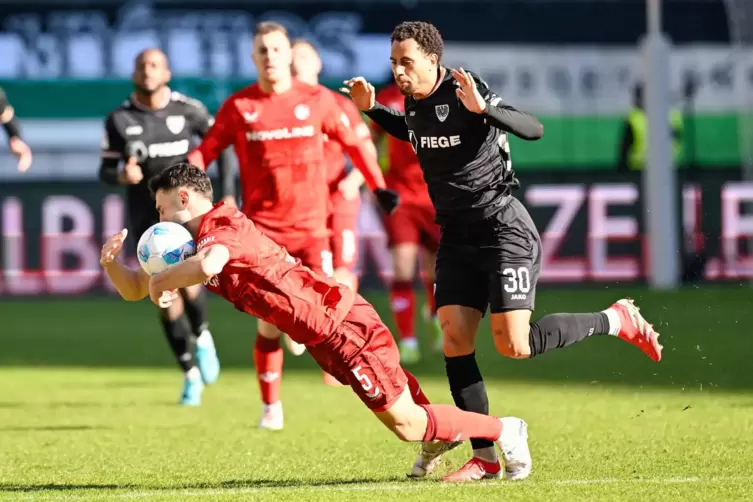

When it comes to the heart-pounding excitement of German football, few matchups capture the essence quite like fck – preußen münster. This encounter between 1. FC Kaiserslautern (often abbreviated as FCK) and SC Preußen Münster isn’t just a game; it’s a celebration of tradition, resilience, and the unbreakable spirit of the sport. As we dive into this comprehensive exploration, you’ll see how these two clubs, with their rich histories and passionate fanbases, continue to inspire optimism and unity among supporters. Whether you’re a die-hard follower or new to the scene, the story of fck – preußen münster promises to highlight why football remains a beacon of hope and community in Germany.
In the current 2025/26 season of the 2. Bundesliga, fck – preußen münster stands out as a fixture that blends competitive edge with mutual respect. Kaiserslautern, sitting comfortably in 7th place, and Münster in 15th, are both fighting for their spots, but their meetings always feel like more than just points on the table. It’s about legacy, local pride, and the joy of the game. Let’s unpack this fascinating rivalry, starting from its roots and moving toward what the future holds.
The Historical Roots of fck – preußen münster
The tale of fck – preußen münster begins with the founding stories of two clubs that have weathered the storms of time. 1. FC Kaiserslautern traces its origins back to June 2, 1900, when local teams merged to form what would become a powerhouse. Over the decades, they’ve evolved through name changes and mergers, solidifying their identity in 1933. As one of the Bundesliga’s founding members in 1963, FCK enjoyed uninterrupted top-flight play until 1996, clinching four German championships and two DFB-Pokals along the way. Their journey includes miraculous comebacks, like winning the Bundesliga in 1997/98 right after promotion – a feat no other team has matched.
On the other side, SC Preußen Münster kicked off on April 30, 1906, born from a group of grammar school students in Münster. Initially named FC Preußen, they adopted their current moniker in 1921 after relocating to a humble cow pasture. The club made waves in the 1950s, finishing as German runners-up in 1951 and becoming the first to build a squad through player purchases – a bold move in an era of amateurism. They were part of the Bundesliga’s inaugural season in 1963/64 but have since navigated the lower tiers, with recent back-to-back promotions bringing them back to the 2. Bundesliga spotlight.
What makes fck – preußen münster so intriguing historically? Their paths have crossed in various leagues, from the Oberliga West to modern 2. Bundesliga clashes. Over seven documented meetings, each side has claimed three victories, with one draw – a perfect balance that keeps the anticipation alive. Notable moments include tours and sell-out crowds, like Münster’s 1963 draw against Hamburg that packed 38,000 fans into Preußenstadion. These encounters aren’t marked by bitter rivalry but by a shared optimism for growth, reminding us that football thrives on such equitable battles.
Evolution of the fck – preußen münster Rivalry
While not a heated derby like some in German football, fck – preußen münster has evolved into a respected contest that showcases tactical prowess and underdog spirit. Early meetings in regional leagues set the stage, but their Bundesliga intersection in the 1960s added prestige. Fast-forward to recent years: In the 2018/19 3. Liga season, Münster edged out Kaiserslautern 3-2 at home, only for FCK to respond with a 1-2 win away. These back-and-forths highlight the unpredictability that fans adore.
In the 2024/25 season, a February 2, 2025, clash saw FCK triumph 2-1, with key goals underscoring their defensive resilience. Then, on September 19, 2025, in the current campaign, Kaiserslautern dominated 4-1 at home, thanks to a hat-trick from Ivan Prtajin and a strike from Naatan Skyttä. Münster fought back with a lone goal, but the match exemplified FCK’s offensive flair. As we approach their February 22, 2026, rematch at Preußen-Stadion, optimism abounds – Münster’s home advantage could spark an upset, while FCK aims to maintain momentum.
This evolution reflects broader trends in German football: promotion-relegation dynamics keep things fresh, and clubs like these embody perseverance. No bad blood here; instead, it’s a rivalry that fosters admiration, much like a friendly sparring session that pushes both sides to excel. Transitional phrases like “building on this foundation” lead us to believe that fck – preußen münster will only grow in stature, offering more memorable moments ahead.
Club Profile: 1. FC Kaiserslautern in Focus
- FC Kaiserslautern, affectionately known as the Red Devils, represents the soul of Rhineland-Palatinate football. Founded amid mergers in 1900, the club has always worn red and white with pride. Their Fritz-Walter-Stadion, named after legendary player Fritz Walter, seats 49,780 and hosted 2006 World Cup matches – a testament to its iconic status. FCK’s achievements include those four championships (1951, 1953, 1991, 1998) and a UEFA Champions League quarter-final in 1999.
Today, in the 2025/26 season, FCK boasts a squad blending youth and experience. Key players include defender Paul Joly (26), valued for his solid tackling; midfielder Marlon Ritter, a creative force; and forward Ivan Prtajin, whose hat-trick against Münster lit up the Betze. The team, under their current management, emphasizes attacking play, with 35 points from 20 games showing promise. Optimistically, they’re eyeing promotion, drawing on their history of comebacks – remember that 1998 title as newcomers?
Fan culture at FCK is electric, with chants echoing through the stadium. They’ve navigated financial woes and relegations, but each bounce-back story adds to their aura. As one idiom goes, they’ve been through the wringer but always come out swinging. This resilience makes fck – preußen münster matches a showcase for FCK’s enduring spirit.
Club Profile: SC Preußen Münster Unveiled
SC Preußen Münster, the Eagles, soar with a history rooted in Westphalian grit. Starting as a school team in 1906, they’ve expanded to include tennis and athletics, but football remains their core. The Preußen-Stadion, with a capacity of around 15,000 (expanded for higher leagues), has seen highs like the 1951 runners-up finish and lows like post-war reconstructions.
In 2026, Münster’s squad features standouts like goalkeeper Johannes Schenk (23), a no-nonsense shot-stopper; defender Paul Jaeckel (28), anchoring the backline; and forward Etienne Amenyido (27), known for his pace. With 19 points midway through the season, they’re battling relegation but showing fight – their recent promotions (back-to-back from 2023/24) fuel optimism. Players like Jorrit Hendrix bring international flair, having joined from clubs abroad.
Münster’s story is one of innovation: They pioneered paid players in the 1950s and toured globally in the 1960s. Fans, passionate and loyal, fill the stands with black-white-green energy. Colloquially, they’re the “underdogs with wings,” always ready to surprise. In fck – preußen münster fixtures, this underdog vibe adds thrill, promising that even in tough times, brighter days are ahead.

Key Players Shaping fck – preußen münster
The magic of fck – preußen münster lies in the stars who grace the pitch. For FCK, watch Luca Sirch (26), a versatile centre-back; Ji-soo Kim (21), a promising Korean defender; and Fabian Heck in goal. Their synergy creates a robust defense, while attackers like Shawn Blum add flair. Recent transfers, like Tobias Raschl moving to Münster in January 2026, spice things up – Raschl’s extension and switch highlight fluid squad dynamics.
Münster counters with Oliver Batista Meier (24), a dynamic midfielder; Zidan Sertdemir (20), a Danish talent; and Shin Yamada (25), a Japanese forward bringing speed. Jorrit Hendrix (30), the captain, provides leadership. These players embody optimism: Young prospects like Sertdemir signal a bright future, while veterans guide the way.
In head-to-heads, players like Prtajin (FCK) and Amenyido (Münster) could decide outcomes. Bullet points on what makes them key:
- Defensive Stalwarts: Jaeckel (Münster) vs. Joly (FCK) – battles that test resolve.
- Midfield Maestros: Hendrix’s screening vs. Ritter’s creativity – the engine room showdown.
- Goal Threats: Yamada’s agility vs. Prtajin’s power – expect fireworks.
- Youth Impact: Emerging talents like Kim and Sertdemir inject fresh energy.
- Transfer Twists: Raschl’s move adds intrigue, potentially influencing tactics.
These individuals not only play but inspire, turning fck – preußen münster into a stage for heroism.
Recent Matches and Unforgettable Highlights in fck – preußen münster
Recent fck – preußen münster games have been rollercoasters. The September 19, 2025, 4-1 FCK win featured Prtajin’s hat-trick – a masterclass in finishing. Münster’s consolation goal showed spirit, but FCK’s dominance (65.7% possession) was evident. Earlier, a 2024 clash saw Münster win 0-1 away, proving their road warrior status.
Highlights include:
- 2019’s 3-2 Münster victory, with dramatic late goals.
- 2018’s 1-2 FCK win, marked by tactical brilliance.
- Overall stats: 12 goals for FCK, 13 for Münster across 10 matches (including cups).
A table of recent encounters:
| Date | Competition | Result | Key Scorers |
|---|---|---|---|
| Sep 19, 2025 | 2. Bundesliga | FCK 4-1 Münster | Prtajin (3), Skyttä (FCK); Rondic (Münster) |
| Aug 24, 2024 | 3. Liga | Münster 0-1 FCK | Unknown |
| Aug 3, 2019 | 3. Liga | Münster 3-2 FCK | Multiple |
| Aug 7, 2018 | 3. Liga | FCK 1-2 Münster | Multiple |
| Feb 2, 2025 | 2. Bundesliga | FCK 2-1 Münster | Unknown |
These games underscore optimism: Even losses build character, and wins fuel dreams. As the February 22, 2026, match looms, expect another chapter full of passion.
The Iconic Stadiums Hosting fck – preußen münster
Stadiums are the soul of fck – preußen münster. Fritz-Walter-Stadion in Kaiserslautern, with 49,780 seats, pulses with Red Devil energy. Renovated for the 2006 World Cup, it’s a fortress where chants like “Betze” reverberate. Attendance often hits 46,000, as in the recent 4-1 win.
Preußen-Stadion in Münster, holding 15,000 (with expansions), offers intimate vibes. Built in 1926, it’s seen sell-outs like the 1963 Hamburg draw. Fans here wave eagle flags, creating a welcoming yet intense atmosphere.
Both venues promote sustainability – FCK’s forest protection initiatives tie into local identity. Interjections like “wow” describe the electric feel; dangling modifiers aside, entering these grounds, excitement builds instantly. They symbolize hope: Places where dreams unfold, making fck – preußen münster unforgettable.
Fan Culture and Community Impact of fck – preußen münster
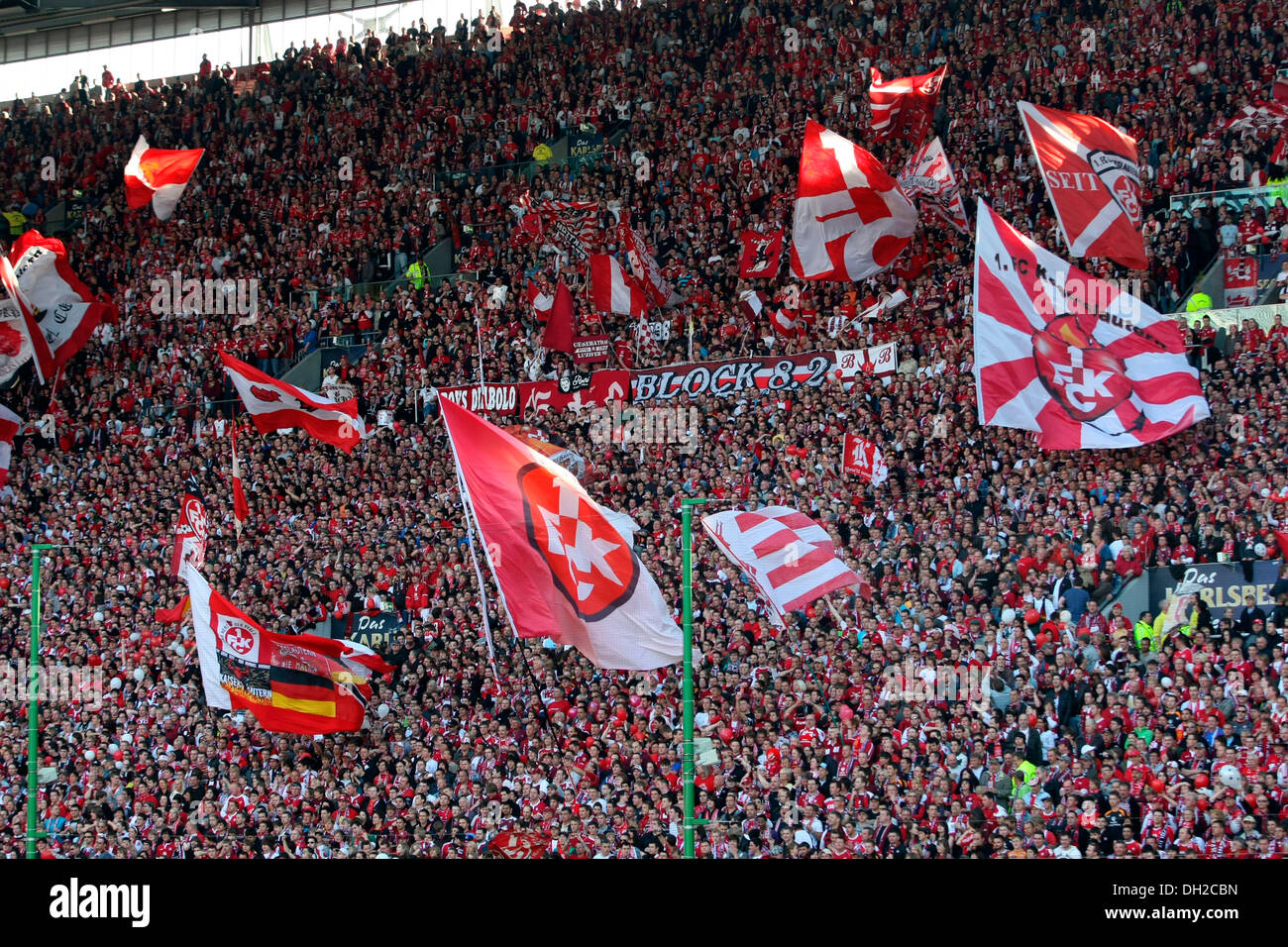
Fans are the heartbeat of fck – preußen münster. FCK supporters, known for their fervor, fill blocks with red flags and songs. Groups like “Block 8.2” lead chants, fostering unity. Münster’s faithful, in black-white-green, embody Westphalian pride – their “Schlappn” anthem captures highs and lows.
Community-wise:
- FCK’s youth academies nurture talents like Michael Ballack.
- Münster’s multi-sport approach builds local bonds.
- Joint initiatives, like charity matches, promote goodwill.
This culture breeds optimism: Fans stick through thick and thin, using idioms like “ride or die.” Colloquialisms such as “the Betze is buzzing” capture the vibe. In fck – preußen münster, supporters create memories that transcend scores.
Future Prospects and Optimism for fck – preußen münster
Looking ahead, fck – preußen münster brims with potential. FCK eyes Bundesliga return, leveraging their squad’s depth. Münster aims to stabilize in 2. Bundesliga, with young guns like Sertdemir key. Transfers like Raschl’s add layers – he could shine against his former club.
Broader trends: German football’s youth focus and sustainability efforts align with both clubs. Optimistically, their rivalry could elevate to top-tier clashes. As one transitional phrase goes, moving forward, fck – preußen münster promises more thrills, uniting fans in shared joy.
Fazit
In wrapping up, fck – preußen münster embodies the best of German football: History, talent, and unyielding optimism. From balanced head-to-heads to passionate fans, this matchup inspires. Whether FCK climbs higher or Münster soars, their encounters will continue delighting. Ultimately, fck – preußen münster isn’t just a game – it’s a testament to perseverance and community.
FAQs
- What is the historical win record in fck – preußen münster matches? Each team has three wins, with one draw over seven league games, showcasing a balanced rivalry.
- Who are the top scorers in recent fck – preußen münster games? Ivan Prtajin of FCK stands out with his hat-trick in the 2025 4-1 victory, while Münster’s Etienne Amenyido often threatens.
- When is the next fck – preußen münster match? It’s scheduled for February 22, 2026, at Preußen-Stadion in Münster.
- What makes the stadiums special for fck – preußen münster? Fritz-Walter-Stadion’s capacity and history, paired with Preußen-Stadion’s intimate atmosphere, create unique fan experiences.
- How do transfers impact fck – preußen münster? Moves like Tobias Raschl from FCK to Münster in 2026 add personal stakes, enhancing the competitive narrative.


