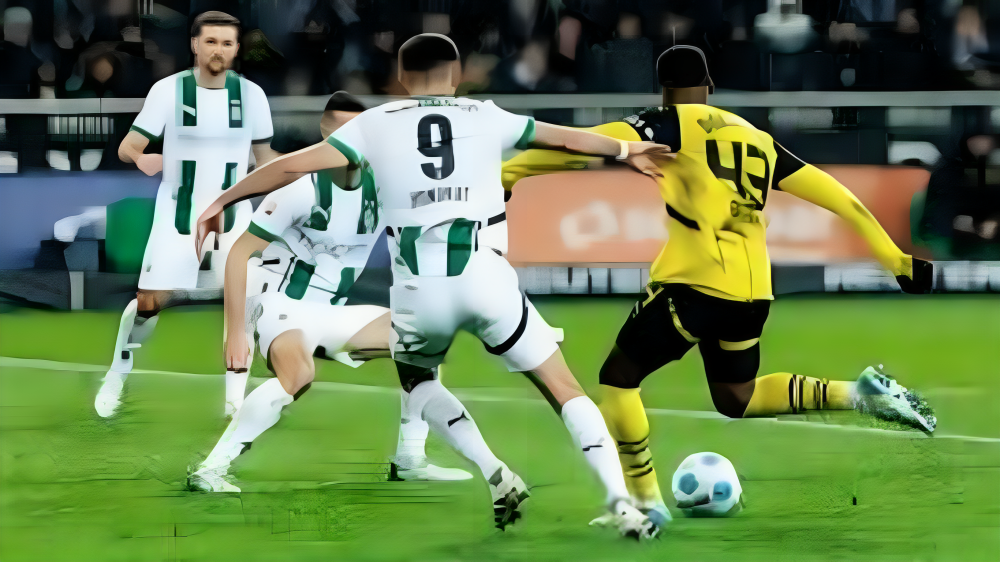

Ah, the thrill of a good football rivalry—it’s like that old friend who shows up unannounced, stirs up a bit of chaos, and leaves you buzzing for days. And when it comes to Dortmund Gladbach, we’re talking about a matchup that’s as much about shared roots as it is about fierce competition. Nestled in the heart of North Rhine-Westphalia, these two Borussias—Dortmund and Mönchengladbach—have been trading blows since the early days of German football, creating moments that fans still whisper about in pubs and on terraces. It’s not just a game; it’s a celebration of passion, resilience, and that unshakeable optimism that keeps the beautiful game alive. In this deep dive, we’ll explore the history, the heroes, and the heart-pounding drama of Dortmund Gladbach, proving why this fixture remains one of the Bundesliga’s most captivating tales.
Picture this: two clubs with “Borussia” in their name, both rising from humble beginnings to challenge the giants, yet always ready to clash like siblings over the last slice of strudel. Dortmund Gladbach isn’t your typical blood feud—it’s got layers, laughs, and a whole lot of goals. As we gear up for their next showdown, let’s lace up our boots and journey through the highs, the heartbreaks, and the hope that defines it all.
The Origins of Dortmund Gladbach: Where Two Borussias Were Born
Let’s rewind the clock a bit, shall we? The story of Dortmund Gladbach starts not with a thunderous tackle, but with a shared sense of identity in the industrial powerhouse of Germany’s west. Borussia Dortmund, founded in 1909 by a group of lads who fancied a kickabout away from the local gymnastics club, took their name from a nearby brewery—practical folks, those early BVB supporters. Over in Mönchengladbach, the club sprang to life in 1900, dubbing themselves Borussia after the Latin nod to Prussia, a cheeky wink at the region’s Prussian heritage. Fast forward to the post-World War II boom, and both outfits found themselves in the thick of regional leagues, battling for supremacy in the Western German Championship.
By the 1960s, as the Bundesliga burst onto the scene in 1963, Dortmund Gladbach became a fixture worth watching. Dortmund’s first Bundesliga clash with Gladbach came in 1965, a gritty 2-1 win for the hosts that set the tone for what would become the Borussenderby. It wasn’t always fireworks—early meetings were more like polite handshakes with the occasional elbow—but the seeds were planted. These weren’t city neighbors like Dortmund’s heated Revierderby with Schalke; no, Dortmund Gladbach felt like cousins reuniting at a family wedding, all smiles until someone mentions the inheritance.
What makes this rivalry tick, though? It’s that underdog spirit, you see. Both clubs hail from working-class towns fueled by coal and steel, where football was less about glamour and more about grafting for every inch. Dortmund’s yellow brigade and Gladbach’s foals (that’s “Die Fohlen” for the uninitiated) embodied that grit, turning matches into mini-epics of endurance. And hey, with both sharing the Borussia badge of honor, there’s an unspoken pact: prove you’re the better one. It’s optimistic, isn’t it? In a league dominated by Bavarian behemoths, Dortmund Gladbach reminds us that heart can outshine hype every time.
A Storied History: How Dortmund Gladbach Shaped the Bundesliga
Diving deeper into the annals, the history of Dortmund Gladbach reads like a Bundesliga bestseller—full of plot twists, underdog triumphs, and enough goals to fill a highlight reel. Over 50 official clashes, Dortmund edges it with 32 wins to Gladbach’s 13, plus five draws that left everyone scratching their heads. Average goals per game? A whopping 3.20—talk about value for your ticket money!
The 1970s marked the golden era, when Gladbach were the kings of cool under coach Hennes Weisweiler, clinching five titles and rubbing shoulders with Europe’s elite. Dortmund, not ones to be left in the dust, responded with their own flair, winning the 1966 Cup Winners’ Cup and building a squad that could tango with the best. One infamous low for BVB came in 1978: a 12-0 thrashing at home to Gladbach, a scoreline so lopsided it still haunts nightmares. But oh, the comebacks! By the 1990s, Dortmund under Ottmar Hitzfeld flipped the script, snagging back-to-back Bundesligas in ’95 and ’96, while Gladbach rebuilt from the shadows.
Fast-forward to the modern day, and Dortmund Gladbach has evolved into a barometer for both clubs’ ambitions. In the 2010s, Jürgen Klopp’s gegenpressing revolution at Dortmund turned these encounters into goal fests, like the 4-3 thriller in 2014 where BVB clawed back from the brink. Gladbach, with their youth academy wizardry, hit back—remember the 5-1 upset in 2019? It’s this ebb and flow that keeps fans hooked. Sure, it’s not the venomous bite of Der Klassiker, but Dortmund Gladbach has that familial fire: predictable in its unpredictability, always promising more.
To break it down, here’s a quick snapshot of their head-to-head evolution:
| Decade | Dortmund Wins | Gladbach Wins | Draws | Notable Moment |
|---|---|---|---|---|
| 1960s-1970s | 8 | 6 | 2 | Gladbach’s 12-0 demolition (1978) |
| 1980s-1990s | 10 | 4 | 1 | Dortmund’s title-clinching era |
| 2000s-2010s | 9 | 2 | 2 | Klopp’s 4-3 comeback (2014) |
| 2020s | 5 | 1 | 0 | Recent 3-2 Dortmund thriller (2025) |
These numbers don’t lie—they whisper of battles fought and futures bright.
Iconic Moments in Dortmund Gladbach: Goals That Echo Through Time
Nothing bonds rivals like a moment that defies logic, and Dortmund Gladbach is littered with ’em. Take April 20, 2025: BVB down 1-0 early, then bam—three goals in nine first-half minutes from Serhou Guirassy, Felix Nmecha, and Daniel Svensson. Gladbach clawed one back via Kevin Stöger’s penalty, but Dortmund held on 3-2, a win that kept their Champions League dreams flickering. Coach Niko Kovac called it “vital against a strong Gladbach,” and boy, was he right.
Rewind to 1978’s dark day for Dortmund: that 12-0 loss, where Gladbach’s Allan Simonsen danced through defenses like they were standing still. It stung, sure, but it fueled BVB’s fire—within years, they were European champions. Or consider the 2012 DFB-Pokal semi, a 4-2 Dortmund romp that showcased Marco Reus at his electric best, slinging passes that turned defenders to jelly.
And let’s not forget the fan magic. In 2020, amid empty stands due to the pandemic, Gladbach’s virtual “wall of foam fingers” tribute to Dortmund’s Yellow Wall was a heartwarmer, proving rivalry needn’t mean resentment. These snippets? They’re the spice—moments where heroes emerge, villains fade, and optimism reigns. Dortmund Gladbach isn’t about one knockout punch; it’s a symphony of surprises.
- The Comeback Kid: Guirassy’s 41st-minute equalizer in 2025, a low drive that silenced Borussia-Park.
- Foals’ Fury: Stöger’s cool penalty, a reminder that Gladbach never quits.
- Yellow Wall Roar: Even in defeat, Dortmund’s fans turn losses into legends.
It’s these flashes that make you believe: the next iconic moment is just a whistle away.
The Electric Atmosphere: Signal Iduna Park Meets Borussia-Park
Now, let’s talk venues, because nothing amps up Dortmund Gladbach like the cauldrons they call home. Signal Iduna Park in Dortmund? It’s a beast—Germany’s largest stadium at 81,365 capacity, with the legendary Yellow Wall (Südtribüne) standing 25,000 strong, a sea of black and yellow that roars like a Ruhr thunderstorm. Built in 1974 as Westfalenstadion, it’s hosted World Cup semis and Champions League finals, but come derby day, it’s all about that spine-tingling “Heja BVB!” chant echoing off the rafters. Fans arrive hours early, scarves aloft, turning the pre-match into a festival of flares and folk songs.
Flip to Gladbach’s Borussia-Park, a sleek 54,057-seater opened in 2004 to replace the creaky old Bökelberg. Nicknamed “The Stable” for its foal-themed stands, it’s got that modern edge—VIP lounges, a buzzing fan shop—but don’t let the polish fool you. The Nordkurve terrace pulses with “Fohlen, los!” cries, and on Dortmund days, it’s a powder keg of pyro and passion. Proximity helps: just 70 miles apart, fans caravan between the two, turning highways into rivers of color.
What sets Dortmund Gladbach atmospheres apart? It’s the intimacy amid the intensity. Unlike sterile mega-arenas, these grounds feel alive, almost breathing with the crowd. Optimism thrives here—win or lose, you’re part of something bigger. As one Gladbach veteran put it, “It’s like arguing with your brother: hurts in the moment, but you’d fight the world for ’em after.”
Stars of the Show: Key Players Lighting Up Dortmund Gladbach
Every great rivalry needs its gladiators, and Dortmund Gladbach delivers in spades. For BVB in 2025, Serhou Guirassy is the talisman—a Guinean powerhouse who’s netted five league goals already, his predatory instincts turning half-chances into highlights. Flanking him, Maximilian Beier brings youthful zip, while Carney Chukwuemeka’s midfield guile (fresh from Chelsea) adds that X-factor pass. Pascal Groß anchors the engine room, his vision stitching attacks like a master tailor.
Over in foal country, Tim Kleindienst leads the charge, a burly striker whose hold-up play terrifies defenses. Ko Itakura’s defensive steel—scoring screamers from deep—pairs with Kevin Stöger’s set-piece sorcery, while Julian Weigl (ex-Dortmund, ironically) bosses the midfield with calm authority. Jonas Omlin in goal? A shot-stopper who’s conceded fewer headers than most, keeping Gladbach’s backline tidy.
These lads aren’t just players; they’re plot drivers. Imagine Guirassy vs. Itakura—a duel of power and poise that could swing any Dortmund Gladbach tie. It’s optimistic fuel: young talents rising, veterans grinding, all chasing glory. Who’ll shine brightest next? Place your bets, but root for the magic.
Here’s a quick player showdown table:
| Player (Team) | Position | 2025 Stats (Goals/Assists) | Why They Matter in Dortmund Gladbach |
|---|---|---|---|
| Serhou Guirassy (Dortmund) | Striker | 5/3 | Lethal finisher in tight derbies |
| Tim Kleindienst (Gladbach) | Striker | 4/2 | Bully-ball expert against BVB backline |
| Carney Chukwuemeka (Dortmund) | Midfield | 2/4 | Creative spark for quick counters |
| Kevin Stöger (Gladbach) | Midfield | 3/3 | Penalty king in pressure moments |
Tactical Chess: Strategies That Define Dortmund Gladbach Clashes
Football’s a thinking man’s game, and Dortmund Gladbach? It’s chess with cleats. Niko Kovac’s Dortmund thrives on high-octane pressing—think Klopp-lite, with full-backs bombing forward and mids like Groß recycling possession like pros. Against Gladbach, they exploit flanks, targeting Kleindienst’s aerial duels with Svensson’s crosses. It’s optimistic chaos: score early, ride the wave.
Gerardo Seoane’s Foals counter with pragmatic poise—compact 4-2-3-1, Weigl shielding a back four that’s stingy on headers. They hit on the break, Stöger’s dead balls a weapon. In recent tilts, like that 3-2 Dortmund win, Gladbach’s press faltered mid-half, letting BVB’s subs (hello, Chukwuemeka) flip the script.
Transitionally, it’s fluid: Dortmund Gladbach often hinges on who adapts quickest. Dangling a modifier here—exhausted from midweek Euros, Gladbach’s legs gave way in ’25. Idioms aside, it’s about balance—press too hard, get burned; sit too deep, get picked off. The beauty? Tactics evolve, but the thrill stays timeless.
Fan Culture: The Heartbeat of Dortmund Gladbach Passion
Forget the pitches; the real magic brews in the stands. Dortmund’s Yellow Wall? A living, breathing entity—25,000 voices syncing in choreographed tifos that’d make a Broadway director jealous. It’s colloquial heaven: “Südtribüne forever!” belts out, beer in hand, turning losses into lore.
Gladbach’s Nordkurve matches it—foal flags waving, pyro popping like fireworks on New Year’s. Their “Sky and White” army travels en masse, turning away days into invasions. Yet, Dortmund Gladbach fans share a bond: mutual respect amid the banter. Post-match, it’s handshakes over schnitzel, not brawls.
This culture’s optimistic core? Community. Both ultras shun commercialization, backing youth and anti-racism. In a divided world, it’s a reminder: rivalry unites as much as it divides. Heck, even joint charity matches happen—proving Borussias stick together.
Recent Thrillers: The 2025 Dortmund Gladbach Saga Unfolds
November 2025’s international break? A tease before the storm. Dortmund, third in the table, eye Champions League spots; Gladbach, mid-pack scrappers, hunger for upset. Their last dance—April’s 3-2 BVB blitz—saw Guirassy drill home the opener, Svensson seal it amid chaos. Gladbach’s penalty fightback? Classic foal fire.
Recent form favors Dortmund: four wins in five since November starts, per stats. Gladbach? Winless duo, but that 3-1 over Köln shows bite. Injuries loom—Dortmund sans Süle, Gladbach missing Honorat—but optimism abounds. Upcoming December 20 clash at Signal Iduna? Expect goals, grit, and glory.
Why Dortmund Gladbach Matters: A Beacon for Bundesliga Fans
In a league of Goliaths, Dortmund Gladbach is David’s slingshot—proof that tradition trumps trends. It spotlights youth (Beier’s darts, Itakura’s rockets), resilience (comebacks galore), and joy (those fan fests). Economically? It pumps millions into local veins, from scarves to sausages. Globally, it exports German football’s soul: accessible, electric, unendingly hopeful.
For newcomers, it’s entry-level epic; for vets, nostalgic nectar. Amid VAR woes and mega-money, Dortmund Gladbach whispers: play for the love. It’s why we tune in, isn’t it? That chance for magic in the mundane.
Fazit
Wrapping this up, Dortmund Gladbach stands tall as a testament to football’s finest quirks—rivalry wrapped in camaraderie, history fueling tomorrow. From 1970s glory to 2025’s nail-biters, it’s evolved yet endures, promising more tales of triumph and tenacity. With stars rising and atmospheres roaring, the Borussenderby beckons brighter days. So here’s to Dortmund Gladbach: may the goals flow, the passion pulse, and the optimism never fade. Prost to the next chapter—who knows, it might just be legendary.
FAQs
1. What is the Borussenderby?
The Borussenderby is the affectionate (and fiery) nickname for matches between Borussia Dortmund and Borussia Mönchengladbach, highlighting their shared “Borussia” heritage and competitive edge in the Bundesliga.
2. Who has the historical edge in Dortmund Gladbach head-to-heads?
Dortmund leads with 32 wins to Gladbach’s 13 across 50 meetings, but Gladbach’s upsets—like the infamous 12-0 in 1978—keep it spicy and unpredictable.
3. When is the next Dortmund Gladbach fixture in 2025?
Mark your calendars for December 20, 2025, at Signal Iduna Park—expect a goal-fest under the Yellow Wall’s watchful eye.
4. Which players should I watch in upcoming Dortmund Gladbach clashes?
Keep eyes on Dortmund’s Serhou Guirassy for predatory strikes and Gladbach’s Tim Kleindienst for hold-up hustle; their duel could steal the show.
5. Why is fan culture so vital to Dortmund Gladbach?
It’s the soul—Yellow Wall chants and Nordkurve pyros turn games into festivals, fostering optimism and unity that outlast any scoreline.