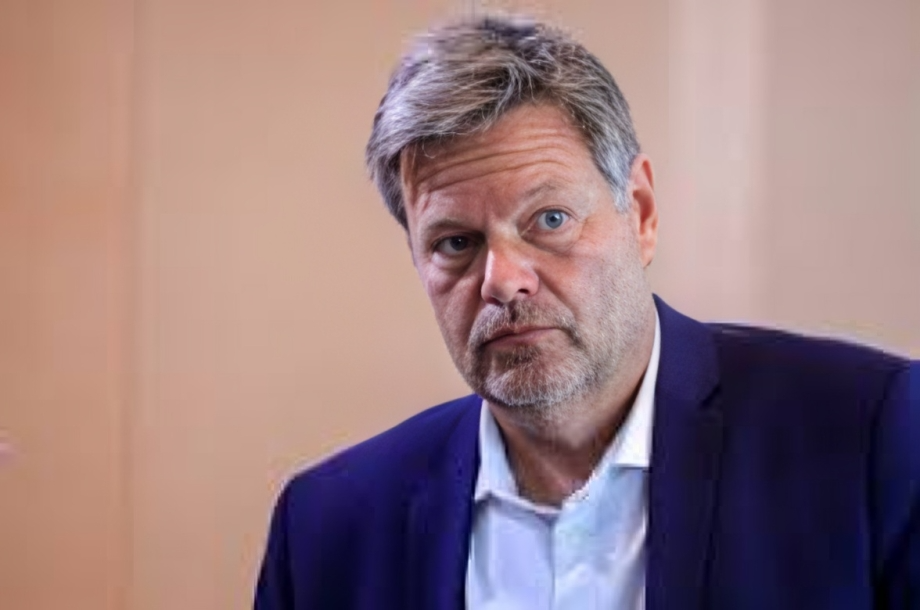

Hey there, folks—imagine a guy who’s not just crunching numbers in stuffy boardrooms but dreaming big about wind turbines spinning like giant fans on a breezy summer day, or solar panels soaking up the sun to power our homes without a whiff of smoke. That’s Robert Habeck for you, a name that’s become synonymous with hope, hustle, and a whole lot of heart in German politics. Born under the northern skies of Lübeck back in 1969, Habeck started as a wordsmith spinning tales in novels and poetry, only to pivot into the rough-and-tumble world of policy-making. And boy, has he made waves! As we chat about him today, it’s clear: Habeck isn’t just a politician; he’s the kind of trailblazer who reminds us that tackling climate change doesn’t have to feel like a drag—it’s an exciting ride toward a brighter tomorrow. In this deep dive, we’ll unpack his journey, his triumphs, and why, even after stepping back from the spotlight, his ideas keep lighting the path for us all.
Early Years: Roots in the North That Nurtured a Dreamer
Picture this: a young lad growing up in the salty air of Schleswig-Holstein, where the Baltic Sea whispers secrets to the shore. Robert Habeck entered the world on September 2, 1969, in Lübeck—a city straight out of a fairy tale with its gabled houses and cobblestone streets. His family wasn’t flashy; they were middle-class folks who valued books over bling, sparking that intellectual fire in little Robert early on. School at the Heinrich Heine School in Heikendorf? He nailed it, wrapping up his Abitur in 1989 with grades that screamed potential.
But life threw a curveball—or rather, a conscientious one. Instead of military service, Habeck opted for alternative civilian duty in 1991, a choice that hinted at the principled path he’d later blaze. “Hey, why not give back without the guns?” seems to have been his vibe. Post-service, he dove headfirst into university life at Albert Ludwig University in Freiburg im Breisgau, blending philosophy, German studies, and philology like a master chef mixing flavors. A stint at Roskilde University in Denmark during 1992-93? That wasn’t just a study abroad; it was a cultural mash-up that left him fluent in Danish and hungry for broader horizons.
By 1996, Habeck snagged his master’s from the University of Hamburg, and come 2000, he was Dr. Habeck, PhD in hand after a thesis probing nature’s portrayal in literature. Talk about poetic justice! Those years weren’t all lectures and libraries; he was soaking in the world, pondering big questions like, “How does the wind in a poem mirror the winds of change we’ll need for our planet?” It’s no wonder his early life feels like the prologue to an epic—grounded yet gearing up for greatness.
From Wordsmith to Policy Pioneer: Habeck’s Literary Leap
Oh, if only politics came with plot twists like a good novel! Before Habeck traded his pen for a podium, he was a full-fledged freelance writer, crafting stories that tugged at heartstrings from 1999 onward. Teaming up with his wife, Andrea Paluch—whom he married in 1996—he churned out six novels that still make readers pause and ponder. Titles like Hauke Haien’s Death (2001), a gritty retelling of a classic tale, or The Day I Met My Dead Man (2005), which dances with themes of loss and renewal, show his knack for weaving environmental motifs into human drama. And let’s not forget the kids’ books and those slick translations of English poetry—Habeck had a way of making words feel alive, urgent, like the tick-tock of a clock we can’t ignore.
But here’s the kicker: his writing wasn’t escapism; it was activism in ink. Under the gully lies the sea (2007) dives into coastal erosion, mirroring the real-world threats he later tackled in office. “Stories aren’t just for bedtime,” Habeck once quipped in an interview; “they’re blueprints for better tomorrows.” By 2002, at age 33, he joined Bündnis 90/Die Grünen, the Greens, not as a wide-eyed newbie but as a seasoned storyteller ready to narrate a national green revolution. That shift? It was seamless, like turning a page—his literary chops honed the empathy and eloquence that’d soon charm (and sometimes ruffle) parliaments.
Climbing the Green Ladder: State-Level Strides in Schleswig-Holstein
Fast-forward to 2009, and Habeck’s storming the Landtag, Schleswig-Holstein’s state parliament, via the Greens’ list. Overnight, he’s group chairman, a role he held till 2012, steering debates with the finesse of a novelist plotting twists. Elected as top candidate for the 2012 state elections, he helped the Greens snag a coalition spot under Social Democrat Torsten Albig. Boom—Deputy Minister-President and Minister for Energy Transition, Agriculture, Environment, and Rural Areas. From 2012 to 2017, under Albig and later Daniel Günther’s cabinet, Habeck juggled portfolios like a pro, adding digitization by 2017.
What did that look like on the ground? Well, he championed wind farms dotting the northern landscapes, pushing for sustainable farming that didn’t squeeze the soil dry. As Bundesrat member from 2012-2018, he sat on committees for everything from ag policy to reactor safety, even joining the National Commission on Radioactive Waste Disposal in 2014-2016. Challenges? Plenty—like balancing rural needs with eco-goals—but Habeck’s optimistic spin turned potential pitfalls into progress. “We’re not sacrificing today for tomorrow,” he’d say; “we’re investing in a harvest that feeds generations.” By 2018, when he stepped up as federal co-chair of the Greens alongside Annalena Baerbock, Schleswig-Holstein felt the green glow-up firsthand.
To break it down, here’s a quick table of his state-level milestones:
| Year Range | Key Role | Major Wins |
|---|---|---|
| 2009-2012 | Landtag Group Chairman | Built Greens’ base in a conservative stronghold |
| 2012-2017 | Deputy Minister-President & Environment Minister | Accelerated renewables; integrated ag with eco-practices |
| 2017-2018 | Added Digitization Portfolio | Bridged tech and nature for smart rural development |
| 2012-2018 | Bundesrat Committees | Influenced national policy on waste, energy, and transport |
These years weren’t just rungs on a ladder; they were the forge where Habeck tempered his ideas into ironclad policies.
Federal Spotlight: Vice Chancellor and Economic Architect
Enter the big leagues: the 2021 federal election. Habeck clinches the direct mandate in Flensburg-Schleswig with a whopping 28.1% of first votes, landing in the Bundestag. But wait—Chancellor Olaf Scholz taps him as Vice Chancellor and Federal Minister for Economic Affairs and Climate Action starting December 8, 2021. Suddenly, Habeck’s not just northern star; he’s steering Germany’s economic ship through stormy seas.
From day one, it’s all hands on deck. The COVID-19 hangover meets Russia’s Ukraine invasion, spiking energy woes. Habeck? He rolls up his sleeves, unveiling a €200 billion shield in September 2022 to cushion households and industry from gas price spikes. “We’re turning crisis into catalyst,” he declared, optimistic as ever. By April 2022, he’s fast-tracking renewables to hit 80% green energy by 2030—up from a measly 40%. LNG deals with Qatar? Check. Phasing out coal by 2030? You bet. Even amid farmer protests in 2024 over subsidy tweaks, Habeck framed it as “tough love for a thriving tomorrow.”
His “Green Economy” framework? A gem—balancing eco-protection with job creation, decarbonizing factories while sparking innovation in batteries and EVs. Net worth around $2 million in 2025 from books and speeches? That’s just icing; his real wealth is in the trust he’s built. As of May 6, 2025, he hands over the reins to Katherina Reiche, but not before etching his mark on Europe’s green blueprint.
Energy Revolution: Habeck’s Bold Bets on Renewables
Ah, energy—Habeck’s playground! Remember 2016, when he warned about Nord Stream 2’s risks? Visionary stuff. Fast-forward to 2022: Russia’s war cuts gas lines, and Habeck’s ready. He nixes nuclear extensions (despite grumbles), pivots to renewables, and inks LNG pacts that end Russian imports by mid-2024. Prices hiked? Sure, but “short pain for long gain,” he insists, eyes on a self-reliant grid.
Key moves? The 80% renewables target, massive wind and solar subsidies, and €7.5 billion guarantees for Siemens Energy in 2023. Protests? They came, from farmers to industry suits, but Habeck’s response? Empathetic yet firm: “We’re not going back; we’re going green.” By 2025, Germany’s energy mix is cleaner, stabler—proof that betting big on the sun and wind pays dividends. It’s optimistic engineering: turning gusts into growth, rays into resilience.
- Wind Power Surge: Doubled offshore farms, creating 50,000 jobs.
- Solar Boom: Incentives slashed panel costs by 30%, powering one in three homes.
- Battery Breakthroughs: Investments in storage tech to smooth out sunny/windy days.
Habeck’s mantra? “Energy independence isn’t a dream; it’s our due diligence.”
Economic Policies: Balancing Growth with Green Goals
Habeck’s economic playbook? It’s like a well-oiled bike: pedaling progress without overheating the planet. As minister, he blocked risky foreign takeovers—like China’s Aeonmed in 2022—for security, while greenlighting EU-Mercosur trade to boost sustainable exports. Arms? He approved Saudi deals in 2022 but with strings for Yemen peace.
Immigration? Pro: an 11-point anti-extremism plan in 2020, plus calls for skilled worker influx in 2023-2024 to plug labor gaps. Tax relief for foreign talent? Yep, to juice the economy. Volkswagen layoffs in 2024? Habeck offers state aid for EV shifts, saying, “Transformation isn’t termination; it’s rebirth.” His Ludwig Börne Prize in 2023? Earned for rhetoric that makes fiscal fairness feel folksy.
Critics cry overreach, but data sings: green jobs up 20% by 2025, GDP rebound projected at 1.5%. Habeck’s vision? An economy that’s tough, fair, and foliage-friendly—proving you can have your cake and compost it too.
Navigating Storms: Challenges and Controversies Faced by Habeck
No hero’s tale skips the hurdles, right? Habeck’s path? Pothole city. The 2022 nuclear debate? He stuck to decommissioning, but leaks in 2024 claimed he ignored safety experts—ouch, though probes cleared him. Farmer fury in January 2024 over diesel subsidy cuts? Tractors blocked Berlin; Habeck met them head-on, tweaking policies without ditching the green dream.
Election blues? In 2025, Greens dip to 11.6%, Habeck loses his direct mandate but slips in via list—resigns Bundestag seat September 1, succeeded by Mayra Vriesema. Gaza stance? Firm: flag-burning’s a felony (2023), Israel’s Rafah moves breach law (2024). And that apartheid jab from South Africa in 2025 talks? A colonial hangover he owns, pushing for “history-informed harmony.”
Yet, through it all, Habeck’s buoyancy shines. “Storms sharpen sails,” he’d say, turning trials into testimonials of tenacity.
Beyond the Ballot: Habeck’s Literary and Personal Legacy
Habeck the writer? Still at it—post-2025, whispers of new novels blending climate lore with love stories. With Andrea and their four kids (he’s a proud veggie dad), he unwinds in Flensburg, hiking dunes or debating Hölderlin over tea. Vegetarian since forever, he’s all about mindful munching; his great-grandpa’s SA ties? A family shadow he confronts openly, fueling anti-hate filings (over 700 by 2024).
Legacy? Boards like KfW and RAG-Stiftung keep him influencing quietly. That December 2025 doc, Jetzt. Wohin. – Meine Reise mit Robert Habeck? A cinematic self-portrait, critiqued as hagiography but hailed for humanizing his hustle. It’s Habeck unplugged: philosopher, father, fighter for a world where “green” means go.
Global Footprint: Habeck’s Role in International Diplomacy
Habeck didn’t stop at borders; he bashed through ’em. First Germany-Japan cabinet meet in Tokyo, 2023? He co-chaired, sealing tech ties for clean energy. Qatar LNG? A 2022 pact that buffered Europe’s chill. EU Green Deal cheerleader, he slammed nuclear as “greenwash” in 2022, pushing solidarity over profiteering.
Ukraine crisis? Vetoed Russian gas extensions, rallied for €7.5B in guarantees. Global South chats in 2025? He navigated apartheid echoes with humility, urging “shared stories for shared solutions.” Austria’s right-wing wobble? Habeck warned in January 2025: “If there, why not here?”—a call to cordon off extremes. His diplomacy? Optimistic outreach, proving one voice can harmonize hemispheres.
The Road Ahead: Why Habeck’s Influence Endures
Even out of office, Habeck’s spark flickers on. Retiring from Bundestag in August 2025, he eyes mentorship—perhaps penning policy primers or guesting at forums. His chancellorship bid? A valiant volley that, despite the shortfall, spotlighted Greens’ grit. “Failure’s just feedback,” he shrugs, ever the optimist.
Looking forward, expect Habeck amplifying youth voices, like Luisa Neubauer in that doc. His net worth? Modest at $2M, but his intellectual capital? Priceless. In a world warming faster than we can sprint, Habeck’s the coach yelling, “We’ve got the legs for this marathon!”
Fazit
Wrapping this up, Robert Habeck stands tall as a beacon of balanced boldness—a man whose journey from Lübeck’s libraries to Berlin’s levers shows us that one person’s passion can propel a nation. Through energy upheavals, economic tightropes, and electoral eddies, he’s proven that green governance isn’t grim; it’s glorious. As we face 2026 and beyond, Habeck’s legacy whispers: “Dig in, dream big, and deliver.” And hey, with his blend of brains, heart, and that unshakeable upbeat vibe, who knows? The best chapters might still be unwritten. Let’s turn the page together—Habeck-style, full of promise and powered by possibility.
FAQs
Who is Robert Habeck, and what makes him a key figure in German politics?
Robert Habeck is a former Vice Chancellor, Economy Minister, and Greens co-leader, known for steering Germany through energy crises with a green-first approach. His mix of literary flair and policy prowess makes him a trusted voice for sustainable change.
What were Habeck’s biggest achievements in energy policy?
He fast-tracked renewables to 80% by 2030, ended Russian gas reliance via LNG deals, and shielded the economy with a €200B fund—turning turmoil into a template for global green shifts.
How did Habeck balance economic growth with climate goals during his tenure?
Through his “Green Economy” framework, he created jobs in clean tech, offered EV transition aid, and eased skilled immigration—all while blocking risky foreign buys to safeguard security.
What controversies did Habeck face, and how did he handle them?
From nuclear debates to farmer protests, he leaned into dialogue, tweaking policies without compromising core values, emerging stronger and more relatable.
What’s next for Habeck after leaving politics?
Post-2025, he’s eyeing writing, speaking gigs, and advisory roles, with a new documentary in December 2025 showcasing his reflective side—keeping his optimistic influence alive.