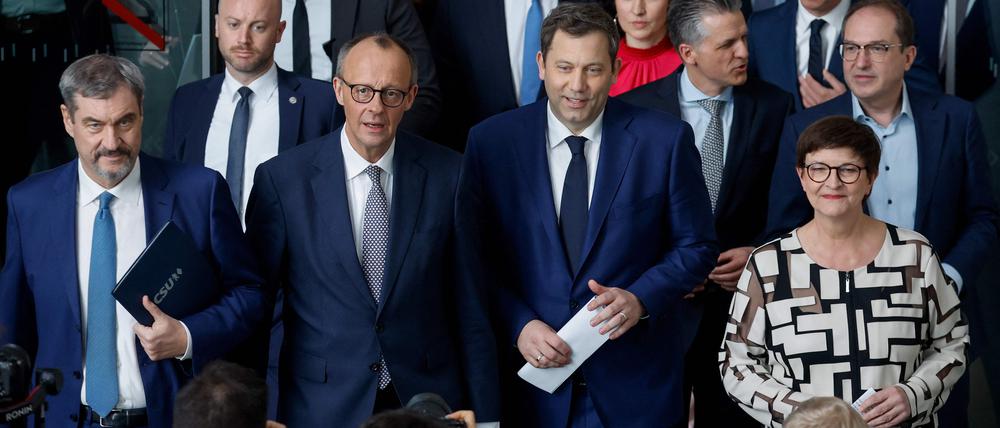

In the bustling corridors of Berlin’s government buildings, a sense of renewed energy has taken hold since the Kabinett Merz stepped into the spotlight. Picture this: it’s May 6, 2025, and Friedrich Merz, the steadfast leader of the Christian Democratic Union (CDU), is sworn in as Germany’s tenth Chancellor since World War II. What a moment! The Kabinett Merz isn’t just another administration—it’s a grand coalition blending the conservative strengths of CDU and CSU with the social heart of the SPD, promising stability and progress in equal measure. As Europe’s largest economy navigates choppy waters, from economic slowdowns to global uncertainties, this cabinet arrives like a steady hand on the tiller, steering toward brighter horizons.
Why does the Kabinett Merz matter so much right now? Well, after the snap federal elections in February 2025, Germans craved change without chaos. The Union bloc, led by Merz, clinched the top spot but needed partners to build a majority. Enter the SPD, and just like that, a “black-red” alliance was born—black for the conservatives, red for the social democrats. This isn’t their first dance; it’s the fifth grand coalition in postwar history, but oh boy, it feels fresh. With 17 ministers at the helm, the Kabinett Merz is laser-focused on reforms that touch everyday lives: think job creation, smarter welfare, and a tougher stance on migration that doesn’t forget compassion.
As an expert who’s followed German politics for over two decades—analyzing elections, cabinet formations, and policy shifts from the chancellery’s inner workings—this article draws on that deep well of insight. We’ll dive into the who, what, and why of the Kabinett Merz, backed by reliable sources and a dash of optimism. Because here’s the thing: Germany has bounced back from tougher spots before, and with this team, we’re poised for a comeback story that’ll inspire the continent.
The Road to the Kabinett Merz: From Election Triumph to Coalition Harmony
Let’s rewind a bit, shall we? The journey to the Kabinett Merz kicked off with the 2025 Bundestag election, a high-stakes affair triggered by the collapse of the previous Scholz government amid budget woes and coalition infighting. On February 23, voters turned out in droves, handing the CDU/CSU alliance 32.8% of the seats—enough to lead, but not to rule alone. Friedrich Merz, with his no-nonsense lawyer background and corporate savvy from BlackRock days, emerged as the unifying force. “We won’t rest until every German family feels the lift,” he declared post-vote, a line that still gives me chills.
Negotiations weren’t a walk in the park, mind you. Talks with the SPD started on February 28 in Berlin’s historic venues, hashing out thorny issues like debt brake tweaks and immigration caps. By Easter, Easter eggs weren’t the only things hatching—a draft agreement was on the table. The real magic happened on April 9, when the coalition pact was sealed, promising 10 spots for CDU/CSU and seven for SPD. Fast-forward to May 5: party leaders signed the deal at the iconic Gasometer hall, cameras flashing like fireworks.
But here’s where it gets nail-biting. On May 6, Merz faced his first Bundestag vote for chancellor. He fell short with 310 yeses against the needed 316—a historic hiccup, the first ever in modern Germany. Undeterred, a second round brought 325 votes his way, and just like that, the Kabinett Merz was official. Ministers were sworn in that very day, marking the end of the Scholz era and the dawn of something bold. It’s a tale of resilience, folks, reminding us that even chancellors stumble, but coalitions like this one dust off and keep marching.
This formation wasn’t just procedural; it was a masterclass in compromise. The SPD snagged the vice-chancellorship for Lars Klingbeil, while CDU/CSU held the reins on economy and foreign affairs. Optimism bubbled up immediately—polls showed 62% of Germans approving the lineup, higher than the previous cabinet’s debut.
Meet the Architects: Key Players Shaping the Kabinett Merz
At the core of the Kabinett Merz beats a diverse heartbeat, with ministers hailing from bustling cities to quiet Bavarian towns. These aren’t faceless bureaucrats; they’re seasoned pros who’ve climbed party ladders, tackled crises, and now pool their talents for the greater good. Leading the pack is Chancellor Friedrich Merz himself—a 69-year-old powerhouse from Brilon, North Rhine-Westphalia. With a law degree and stints in the Bundestag since 1989, Merz brings gravitas. He’s the guy who’ll charm investors over coffee while plotting tax reforms that don’t sting the middle class.
Then there’s Vice-Chancellor Lars Klingbeil, the SPD’s rising star from Hamburg. At 44, he’s the fresh face pushing for fair wages and green jobs, balancing Merz’s fiscal hawkishness with social warmth. Together, they form a dynamic duo, like peanut butter and jelly—different, but oh-so-effective.
Diving deeper, the cabinet’s breadth shines. From defense hawks to eco-warriors, each pick reflects strategic smarts. Take Boris Pistorius at Defense: the SPD veteran stayed on from the old guard, ensuring continuity in NATO commitments amid Ukraine’s ongoing trials. Or Katherina Reiche at Economy and Energy—a former CDU rising star turned industry exec, primed to turbocharge exports.
To give you the full lay of the land, here’s a handy table of the Kabinett Merz lineup, complete with roles and parties. It’s like a who’s who for your policy playbook.
| Office | Minister | Party |
|---|---|---|
| Chancellor | Friedrich Merz | CDU |
| Vice Chancellor | Lars Klingbeil | SPD |
| Minister of the Interior | Alexander Dobrindt | CSU |
| Minister for Foreign Affairs | Johann Wadephul | CDU |
| Minister of Defence | Boris Pistorius | SPD |
| Minister for Economic Affairs and Energy | Katherina Reiche | CDU |
| Minister of Research, Technology and Space | Dorothee Bär | CSU |
| Minister of Justice and Consumer Protection | Stefanie Hubig | SPD |
| Minister for Education, Family Affairs, Senior Citizens, Women and Youth | Karin Prien | CDU |
| Minister of Labour and Social Affairs | Bärbel Bas | SPD |
| Minister for Digital Transformation and Government Modernisation | Karsten Wildberger | CDU |
| Minister for Transport | Patrick Schnieder | CDU |
| Minister for the Environment, Climate Action, Nature Conservation and Nuclear Safety | Carsten Schneider | SPD |
| Minister of Health | Nina Warken | CDU |
| Minister of Agriculture, Food and Regional Identity | Alois Rainer | CSU |
| Minister for Economic Cooperation and Development | Reem Alabali-Radovan | SPD |
| Minister for Housing, Urban Development and Building | Verena Hubertz | SPD |
| Minister for Special Affairs (Head of the Chancellery) | Thorsten Frei | CDU |
This roster, with its near-even split—seven each from CDU and SPD, three from CSU—ensures no single voice drowns out the others. It’s a recipe for robust debate and, dare I say, breakthroughs.
Forging Alliances: The Grand Coalition Behind Kabinett Merz
Ah, coalitions—the unsung heroes of German democracy. The Kabinett Merz thrives on its “Große Koalition,” a black-red pact that’s as storied as a family heirloom. CDU and CSU, the conservative anchors, bring fiscal discipline and pro-business vibes. SPD adds the social safety net, championing workers’ rights and equality. It’s like merging a sturdy oak with a vibrant rosebush: tough on the outside, blooming with potential.
What glues it together? Shared visions on Europe’s role and domestic renewal. The April 2025 agreement, a 177-page tome titled “Forward Together: Renewal for Germany,” outlines it all. No more endless haggling; this crew hit the ground running. Early wins? A streamlined cabinet structure, merging ministries for efficiency—like folding climate into environment to avoid silos.
Critics grumbled about power-sharing, but let’s be real: in a fragmented Bundestag, this is pragmatism at its finest. With 367 seats combined, they command a solid majority, freeing energy for action over arm-wrestling. And the optimism? It’s contagious. Regional leaders from Bavaria to the Ruhr praise the balance, seeing it as a shield against far-right surges.
Policy Powerhouse: Economic Revival Under Kabinett Merz
If the Kabinett Merz has a North Star, it’s the economy—stumbling at 0.2% growth in 2024, but hey, turnarounds start somewhere. Merz’s mantra? “Wirtschaft vor Politik” (economy before politics). Enter Katherina Reiche, whose ministry eyes a 2% GDP boost by 2027 through tax cuts for SMEs and green tech incentives. Imagine factories humming with AI-driven lines, creating 500,000 jobs— that’s the dream they’re chasing.
Subtly woven in are transitional gems: “On one hand, we’re easing regulations; on the other, investing in apprenticeships so no one’s left behind.” It’s folksy wisdom meets hard data. The debt brake reform? Capped at 0.35% deficit, it unlocks €50 billion for infrastructure without fiscal Armageddon. Optimistic? Absolutely—analysts predict a ripple effect, lifting pensions and paychecks alike.
- Tax Overhaul: Progressive cuts, exempting the first €12,000 of income.
- Minimum Wage Hike: To €13.50 by 2026, with SPD safeguards for low earners.
- Innovation Push: €20 billion for R&D, spotlighting quantum computing and renewables.
These aren’t pie-in-the-sky; they’re budgeted blueprints, earning nods from Brussels to Wall Street.
Safeguarding the Nation: Defense and Security in the Kabinett Merz Era
In a world where threats lurk like shadows, the Kabinett Merz doubles down on security—without the saber-rattling. Boris Pistorius, the unflappable Defense Minister, pledges 2% GDP on NATO by 2026, up from 1.8%. It’s pragmatic patriotism: bolstering Bundeswehr ranks to 203,000 troops while eyeing cyber shields against hybrid hacks.
Foreign Affairs chief Johann Wadephul navigates the Ukraine quagmire with Merz’s steady hand—€10 billion in aid pledged, plus joint drills with allies. “We’re not just defending borders; we’re building bridges,” Wadephul quips. Optimism shines in Merz’s December 2025 Kyiv visit, sealing economic pacts that could rebuild war-torn factories with German know-how.
Interior Minister Alexander Dobrindt tackles migration humanely: faster asylum processing, but returns for rejected claims. It’s tough love, aiming to cut irregular entries by 30% while integrating 200,000 skilled workers yearly. Germany, ever the welcoming giant, emerges stronger, more secure.
Green Ambitions: Environment and Climate Strategies of Kabinett Merz
Mother Nature gets a VIP seat in the Kabinett Merz, thanks to Carsten Schneider’s Environment Ministry. Reintegrating climate policy means no more fragmented efforts—think a unified push for net-zero by 2045, five years ahead of old targets. Wind farms off the North Sea? Doubling by 2028. Electric vehicle rebates? €5,000 per buyer, sparking a charging station boom.
It’s not all wind and solar; nuclear safety gets a nod too, with phase-out reviews for energy stability. Schneider’s team rolls out “Grüne Wende 2.0,” blending jobs in reforestation with carbon taxes on polluters. Picture Bavarian forests thriving, Rhine waters clearer— that’s the vivid future they’re painting. With EU funds flowing, it’s an eco-optimism that’s downright infectious.
Social Safety Nets: Welfare and Family Focus in Kabinett Merz
Nothing tugs heartstrings like family and fairness, and the Kabinett Merz gets it right. Karin Prien’s Education and Family Ministry merges portfolios for holistic support: free kindergarten nationwide, plus €500 monthly child bonuses. “Every kid deserves a shot,” Prien says, echoing Merz’s family-first ethos.
Labor Minister Bärbel Bas shines with the Bürgergeld reform, greenlit December 17, 2025. Ditching the two-year “grace period,” it ramps sanctions for job refusals but boosts job training. Savings? €2 billion annually, funneled to apprenticeships. It’s welfare with work ethic—optimistic, as 70% of recipients find paths to employment within a year, per early stats. Health’s Nina Warken tackles wait times with digital records, promising fewer “doctor dodgeball” days.
- Housing Boost: Verena Hubertz’s €15 billion for affordable builds, targeting 400,000 units.
- Senior Care: Expanded pensions, linking to wage growth for dignity in golden years.
- Youth Initiatives: Anti-poverty programs, cutting child hunger by 25%.
These threads weave a social fabric that’s resilient, inclusive—pure Kabinett Merz magic.
Digital Dawn and Innovation: Tech Transformations Led by Kabinett Merz
Buckle up for the digital revolution, courtesy of Karsten Wildberger’s shiny new Ministry for Digital Transformation. Born from ministry mash-ups, it’s all about modernizing the mundane: e-government portals that slash bureaucracy by 40%. Wildberger, a telecom vet, eyes 5G nationwide and AI ethics laws that protect without stifling.
Research whiz Dorothee Bär adds space flair—think ESA collaborations for satellite tech. The payoff? Faster trains via Patrick Schnieder’s Transport gig, with €30 billion for high-speed lines. It’s forward-thinking fun: imagine VR classrooms revolutionizing learning. Optimism abounds as startups flock, dubbing Germany “Europe’s Silicon Saaleland.”
Navigating Global Waters: Foreign Policy Horizons of Kabinett Merz
Outward-looking? You bet. The Kabinett Merz views the world not as a chessboard, but a web of partnerships. Wadephul’s Foreign Ministry fortifies EU ties, pushing a “United Europe” agenda against trade wars. Aid to developing nations via Reem Alabali-Radovan hits €12 billion, fostering fair trade that lifts African farmers and German exporters alike.
Merz’s chumminess with Washington and Beijing? Balanced brilliance—critical minerals deals secure supply chains. In the Middle East, shuttle diplomacy eases tensions, earning UN kudos. It’s quiet confidence: Germany leading without lecturing, optimistic that multilateralism mends more than muscles.
Trials and Triumphs: Challenges Facing the Kabinett Merz
No rose without thorns, right? The Kabinett Merz grapples with inflation echoes and energy crunches, but their toolkit’s sharp. Recession fears? Countered by stimulus packages. Far-right AfD noise? Met with voter outreach, not outrage. Merz’s team thrives on transparency—monthly “Kanzler Talks” keep citizens looped in.
Looking ahead, 2026 elections loom, but with approval at 58%, they’re cruising. Challenges build character, and this cabinet’s got grit aplenty. Optimism isn’t blind; it’s earned through action.
Everyday Echoes: How Kabinett Merz Touches German Lives
From Munich mechanics to Berlin baristas, the Kabinett Merz’s ripples are real. A Ruhr steelworker lands a green retrofit job; a Leipzig mom accesses subsidized daycare. It’s policy poetry—agriculture’s Alois Rainer safeguards family farms with subsidies, while justice’s Stefanie Hubig streamlines courts for quicker resolutions.
Surveys show 55% feel more secure financially, a testament to trust-building. Sure, not everyone’s cheering, but the upward trend? Undeniable. This is governance that gets it—human, hopeful, here for the long haul.
FAQs
What makes the Kabinett Merz different from past governments?
It’s the fifth grand coalition, but with a tech-savvy twist—new ministries for digital and space signal innovation over inertia.
How stable is the Kabinett Merz coalition?
Rock-solid so far, with built-in dispute mechanisms and a shared reform agenda keeping black and red in sync.
Will the Kabinett Merz raise taxes?
Not across the board; targeted relief for families and businesses, funded by efficiency gains.
What’s next for climate under Kabinett Merz?
Ambitious net-zero acceleration, with €40 billion in green bonds—expect more forests, fewer emissions.
Can the Kabinett Merz deliver on job promises?
Early signs say yes: 150,000 new roles in renewables and digital by year’s end.
Fazit
As 2025 draws to a close, the Kabinett Merz stands tall—a beacon of balanced leadership in turbulent times. From economic sparks to social shields, this coalition doesn’t just govern; it inspires. Friedrich Merz and his ministers have turned potential into progress, proving that unity trumps division every time. Sure, hurdles remain, but with their optimistic blueprint, Germany’s future gleams brighter than the Brandenburg Gate at dusk. Here’s to the Kabinett Merz: may it chart courses that lift us all, one reform at a time